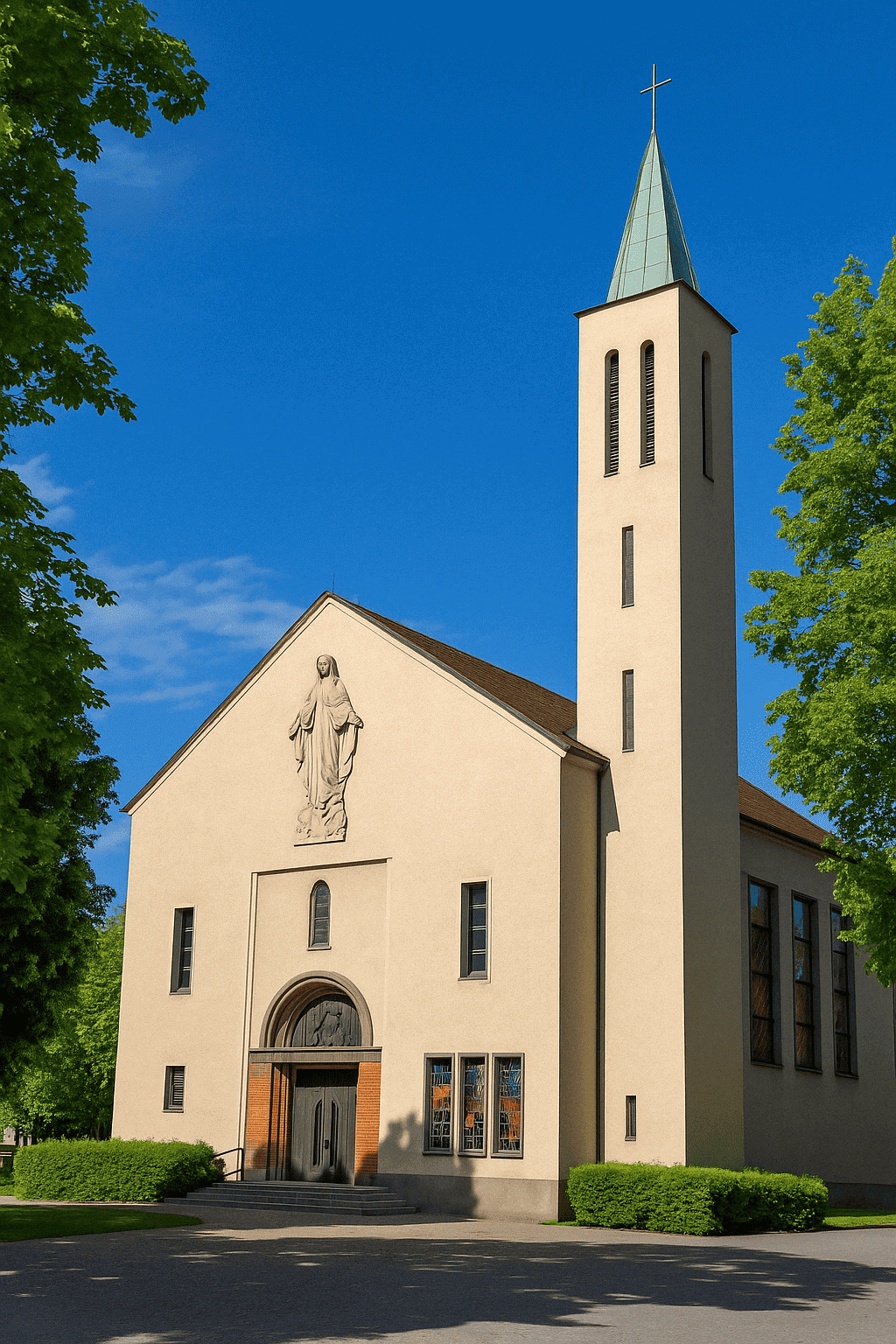
In the heart of Graz’s Jakomini district, where densely built-up streets meet the vibrant life of a modern city, a place awaits you that is completely different: quiet, bright, spiritual – the Münzgraben ChurchSimple and understated from the outside, its impact only unfolds upon closer inspection. And that's precisely what makes it so fascinating for anyone who loves architecture, history, and contemplative spaces.
The church, also known as Fatima Church of the Immaculate Heart of Mary, was built in the post-war period – on the ruins of St. Anne's Church, which was destroyed in the Second World War. What emerged is not a baroque showpiece, but an impressive example of modern sacred building: clear in its lines, reduced in its design, but deeply rooted in symbolism.
For tourists interested in lesser-known but significant places, the Münzgraben Church is a real treasure: Away from the hustle and bustle of the old town, it offers a quiet moment – and a story that tells of how, after destruction, hope and a new beginning can be captured in stone and glass.
The origins of the Münzgraben parish date back to the 17th century. The first church on this site – the St. Anne's Church – was consecrated in 1868, but fell victim to an air raid in 1944. Reconstruction began in 1952, and the current building was opened in 1960 as Fatima Church The name refers to the Marian apparitions in Fátima, Portugal, and gives the place a special spiritual depth to this day.
The church was designed by the Viennese architect George Lippert, who deliberately chose a simple, functional design – typical of post-war reconstruction. Despite this, or perhaps because of it, the building still appears modern today. Particularly impressive: the mighty Madonna of the Protection on the gablethat watches over the building and the contemporary stained glass windows, designed by the artists Gunter Damisch and Fritz Panzerthat bring colorful light effects and modern art into the interior.
The Münzgraben Church is not only a place of faith, but also a Contemporary documentIts architecture represents a new beginning, the rebirth of community, simplicity and essentiality. It demonstrates how spirituality can also be expressed in a modern form – without pomp, but with depth.
What makes this place so special is its quiet power. As soon as you enter the church, the atmosphere changes. It becomes quiet. Light streams through the colorful windows, drawing patterns on the walls. For anyone who likes to pause, reflect, or simply seek beauty beyond the obvious while traveling, this place is a true insider tip.
Visit the church late afternoonwhen the light falls through the stained glass windows and bathes the sanctuary in vibrant colors. Photographers should take time to capture details: the modern Madonna above the portal, the clean lines of the interior, the interplay of light and space.
A little tip: Combine your visit with a walk through the nearby Münzgraben residential district – here you will also find exciting examples of 1950s architecture.
Address:
Münzgrabenstraße 61, 8010 Graz
Journey:
Take tram lines 4 or 5 to the "Münzgrabenkirche" stop. From there, it's just a few steps to the church.
Please accept Statistics cookiesto view the map.
We use Leaflet.js and OpenStreetMap – a GDPR-friendly alternative to Google Maps. When you load the map, your IP address is transmitted to OpenStreetMap's servers. Leaflet itself does not store any data.
Whether hidden courtyards, quiet squares or little surprises in the middle of the city – Graz has countless corners just waiting to be discovered.
Sign up for the exploreGRAZ newsletter and find out every month which places will truly surprise you. Personally selected, lovingly described—and guaranteed, nothing off the shelf.

The Fekonja Ecopark is a hidden natural gem in the Jakomini district - wild, quiet, unspoilt. Perfect for anyone looking for a green retreat in hectic Graz.
Fekonja Ecopark
The ORF Regional Studio Styria, better known as the "Peichl-Torte", is a modern round building in the east of Graz - an architectural insider tip with insights into the world of radio and television.
ORF Regional Studio Styria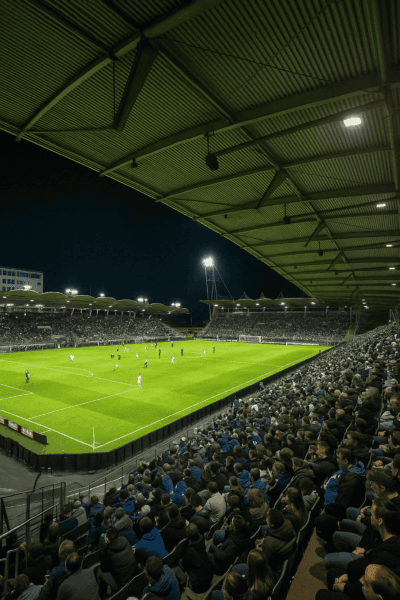
The Merkur Arena and the Merkur Eisstadion in the Liebenau district are hotspots for sport, atmosphere and ice skating fun - perfect for anyone who wants to experience Graz actively and emotionally.
Merkur Arena & ice rink
The MUWA in Graz Jakomini is an interactive museum for all the senses - with hands-on art, optical illusions, spatial experiments and the unique Samadhi bath.
MUWA Graz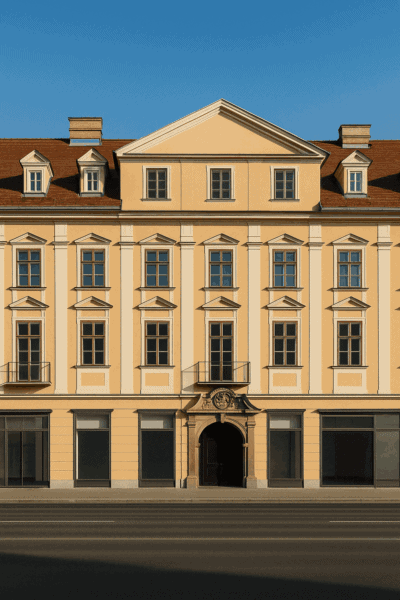
The Alte Post at Jakominiplatz is a hidden architectural gem in the heart of Graz. Behind the classicist façade is a quiet courtyard with history, arcades and art - perfect for anyone who wants to discover old Graz in the middle of the hustle and bustle.
Old Post Office Graz

 English (UK)
  Deutsch
  Italiano
  Français
  Slovenščina
  Español
  Magyar
  Čeština
  Polski