The Graz district Liebenau is an exciting, transforming district with a long history that ranges from rural origins to industrial development and modern urban expansion projects. Between the Mur river meadows, historic farms, and the current stadium area, Liebenau reveals itself as a diverse place where tradition and the future meet. In this article, we take a look at the historical milestones of Liebenau and show why a visit beyond the city center is worthwhile.
The district Liebenau is located in the southeast of Graz and presents itself today as a diverse urban area with local recreational areas, modern infrastructure, and growing urbanity. However, the origins of this district lie deep in the past – as rural settlement in the Murauen. The story of Liebenau is a story of change: from rural idyll to urban dynamism.
Already in the Middle Ages, isolated farms and small settlements existed in the present area of Liebenau. The proximity to Mur shaped the landscape—with meadows, fields, and floodplains. Agriculture was the most important economic sector for centuries.
The name “Liebenau” appears in historical sources from the 14th century onwards and can be traced back to a place name that means “lovely meadow” – a reference to the natural location in the Murauen.
 Symbol photo
 Symbol photo
 Symbol photo
 Symbol photo
In the 19th century, a gradual change began: Through the Expansion of the city of Graz and the improvement of the infrastructure – especially through new road connections – made Liebenau more attractive for industry and commerce.
Especially in the 20th century, the first factories, warehouses and new residential areas were built. At the same time, the village flair preserved in many areas: Old farmhouses, scattered settlements and small religious monuments still characterise the image of the historic Liebenau.
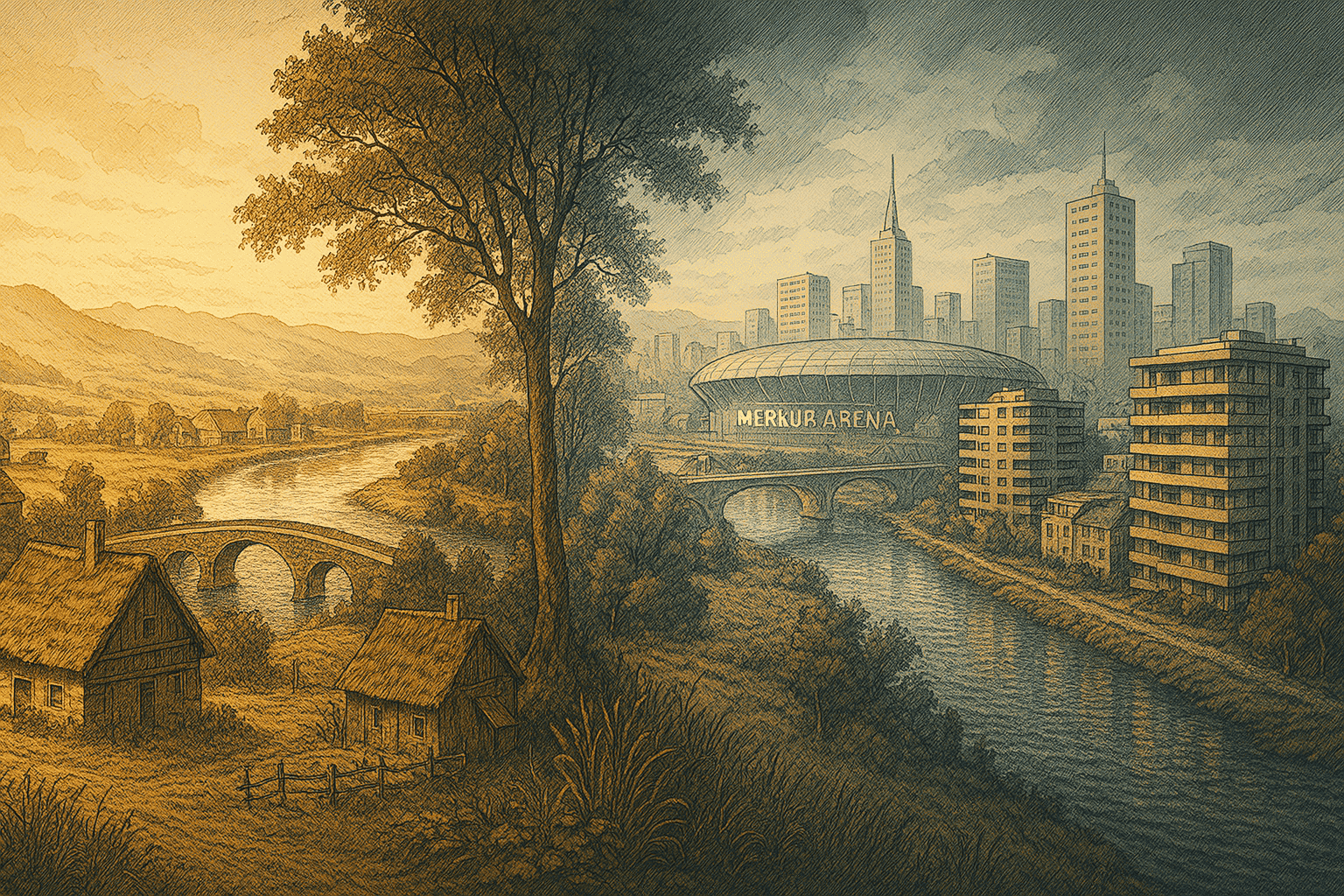
An important development stage for Liebenau was the construction of the Stadium Liebenau, which today serves as Merkur Arena It has become one of the city's most important sports and event venues and has played a key role in shaping the modern cityscape.
The construction of Murpark in Liebenau also influenced the perception of Liebenau as an urban center in the south of Graz. In addition, there are numerous new buildings, schools, office spaces, and transport hubs.
Despite the increasing density, Liebenau has to date achieved much Green space and historical charm preserved. Along the Mura promenade You can go for walks or bike rides, while the historical heritage remains visible in the form of old farmsteads, chapels and wayside crosses.
The combination of Tradition and new beginnings makes Liebenau a district that not only invites you to live, but also to explore – especially for visitors who want to experience Graz off the beaten track.
There's a story behind every street, every square, and every building. If you want to learn more about Graz's hidden past, our newsletter is perfect for you.
Once a month, you'll receive exciting finds, forgotten anecdotes, and historical insights directly in your inbox—compact, well-researched, and told with love for the city.


 English (UK)
  Deutsch
  Italiano
  Français
  Slovenščina
  Español
  Magyar
  Čeština
  Polski